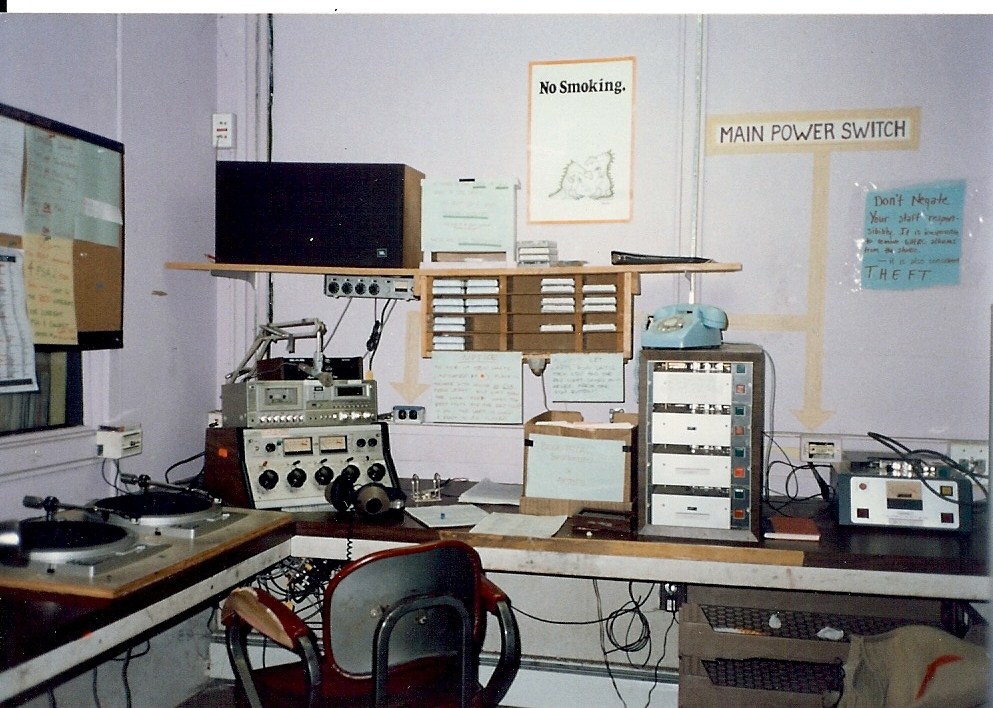
Community and independent college are types of radio service that offer a third model of radio broadcasting beyond commercial and public. Community and independent college stations serve geographic communities and communities of interest. They broadcast content that is popular to a local/specific audience but which may often be overlooked by commercial/mass-media and so-called "public" broadcasters.
A new Facebook page - Boston-area Independent College Radio - has been created with the intention of bringing greater awareness to Boston-area (and beyond) independent college and community radio stations.
DJ's are encouraged to share news and supporters learn what is happeing on the independent student airwaves, web streams and podcasts.
If you produce/host a Boston-area independent college radio program, or are involved in station management
1. Share the page/group with your listeners.
2. Post your program event URL's
3. Share program information
4. Share station information.
5. Grow listenership.
6. Save the world from corporate radio.
If you are a listener, give the page a couple days for DJ's to join and start posting content. Share news of this new page with friends involved in Boston-area college radio by forwarding this article and/or the Facebook event.....unless you're a fan of corporate radio.
http://notlobmusic.blogspot.com reports and reflects on news that affects the traditional / revival / labor / social justice folk, old-time, bluegrass and Celtic music communities in the greater Boston area.
"In this era of pop-driven acoustic music, notloB is keeping the folk tradition alive."
~ Jack Hardy
Showing posts with label community radio. Show all posts
Friday, January 10, 2014
Wednesday, July 31, 2013
Independent College Radio WUML at the Lowell Folk Festival
This is what independent college radio is all about, being a part of and serving the community! WUML (UMass Lowell) set up a remote broadcast facility in Boardinghouse Park at the recent Lowell Folk Festival, from which it broadcast live each and every act who performed on the main stage, and interviewed the artists after their sets. Bravo WUML!
Read WUML's history here.
Community radio is a radio service offering a third model of radio broadcasting in addition to commercial and public broadcasting. Community stations serve geographic communities and communities of interest. They broadcast content that is popular and relevant to a local, specific audience but is often overlooked by commercial or mass-media broadcasters. Community radio stations are operated, owned, and influenced by the communities they serve. They are generally nonprofit and provide a mechanism for enabling individuals, groups, and communities to tell their own stories, to share experiences and, in a media-rich world, to become creators and contributors of media.
Source: wiki
Community and independent college are types of radio service that offer a third model of radio broadcasting beyond commercial and public. Community and independent college stations serve geographic communities and communities of interest. They broadcast content that is popular to a local/specific audience but which may often be overlooked by commercial/mass-media and so-called "public" broadcasters.
If you are curios and wish to learn more, check out these following resources:
Community and Independent College Radio
an open group run by and for community and independent college radio producer/hosts and supporters. Our mission is to promote independent, non-commercial radio, share with our peers and the public news of our own and our stations' programming and network with one another. Sister page: https://www.facebook.com/CommunityandIndependentCollegeRadio
Community and independent college radio stations
A growing list of stations located in the USA.
Photo courtesy of the Lowell Folk Festival, who posted on their Facebook page....
Thanks to all the support from the gang from #WUML, live from Boarding House Park! #LowellFolk FestivalLiked · Sunday
| City of license | |
|---|---|
| Lowell, Massachusetts |
| Broadcast area | Massachusetts college |
|---|
| Frequency | 91.5 MHz |
|---|
| Format | College Radio |
|---|
| ERP | 1,400 watts |
|---|
| HAAT | 63 meters |
|---|
| Class | A |
|---|
| Facility ID | 69410 |
|---|
| Transmitter coordinates |
|---|
| Callsign meaning | University of Masssachusetts Lowell |
|---|
| Former callsigns | WLTI (1967-1975) WJUL (1975-2003) |
|---|
| Owner | University of Massachusetts Lowell |
|---|
| Webcast | Listen Live |
|---|
| Website | wuml.org |
|---|
Read WUML's history here.
Community radio is a radio service offering a third model of radio broadcasting in addition to commercial and public broadcasting. Community stations serve geographic communities and communities of interest. They broadcast content that is popular and relevant to a local, specific audience but is often overlooked by commercial or mass-media broadcasters. Community radio stations are operated, owned, and influenced by the communities they serve. They are generally nonprofit and provide a mechanism for enabling individuals, groups, and communities to tell their own stories, to share experiences and, in a media-rich world, to become creators and contributors of media.
Source: wiki
Community and independent college are types of radio service that offer a third model of radio broadcasting beyond commercial and public. Community and independent college stations serve geographic communities and communities of interest. They broadcast content that is popular to a local/specific audience but which may often be overlooked by commercial/mass-media and so-called "public" broadcasters.
If you are curios and wish to learn more, check out these following resources:
Community and Independent College Radio
an open group run by and for community and independent college radio producer/hosts and supporters. Our mission is to promote independent, non-commercial radio, share with our peers and the public news of our own and our stations' programming and network with one another. Sister page: https://www.facebook.com/CommunityandIndependentCollegeRadio
Not-for-profit
association dedicated to the democratization of the airwaves through
the proliferation of non-commercial, community based, micropower
stations.Community and independent college radio stations
A growing list of stations located in the USA.
Friday, June 7, 2013
Think before you donate to so-called "public" radio
With so many local community and independent college radio stations out there, it is a wonder that anyone listens to corporate commercial or corporate, so-called "public" radio.
And on the "public" radio side, use this blog's search feature for "WGBH" or "WUMB" (two Boston NPR affiliates) to read horror stories about what they have done to eviscerate folk, blues and jazz, the peoples' music*, from Boston's public airwaves).
Instead of donating to corporate/government "public" radio, instead consider donating to and becoming involved with your local community and independent college station.
Community and independent college are types of radio service that offer a third model of radio broadcasting beyond commercial and public. Community and independent college stations serve geographic communities and communities of interest. They broadcast content that is popular to a local/specific audience but which may often be overlooked by commercial/mass-media and so-called "public" broadcasters.
Community and independent college radio stations are operated, owned, and driven by the communities they serve. Community radio is not-for profit and provides a mechanism for facilitating individuals, groups, and communities to tell their own diverse stories, to share experiences, and in a media rich world to become active creators and contributors of media.
So before you pledge to that corporate NPR affiliate, consider instead donating to your local community radio station.

And on the "public" radio side, use this blog's search feature for "WGBH" or "WUMB" (two Boston NPR affiliates) to read horror stories about what they have done to eviscerate folk, blues and jazz, the peoples' music*, from Boston's public airwaves).
Instead of donating to corporate/government "public" radio, instead consider donating to and becoming involved with your local community and independent college station.
Community and independent college are types of radio service that offer a third model of radio broadcasting beyond commercial and public. Community and independent college stations serve geographic communities and communities of interest. They broadcast content that is popular to a local/specific audience but which may often be overlooked by commercial/mass-media and so-called "public" broadcasters.
Community and independent college radio stations are operated, owned, and driven by the communities they serve. Community radio is not-for profit and provides a mechanism for facilitating individuals, groups, and communities to tell their own diverse stories, to share experiences, and in a media rich world to become active creators and contributors of media.
So before you pledge to that corporate NPR affiliate, consider instead donating to your local community radio station.
*Jim Kweskin, used with permission.
-------------------------------------------
Here's a Facebook event created yesterday you can share to educate the masses and spread the appeal.

Before you respond to a "public" radio call for $$$$, consider supporting your local community radio station
June 6 at 2:00pm
Invite Friends · 19 people are going
Wednesday, April 10, 2013
Happy 52nd Birthday, WMBR
Word has been received from Eli Polonsky via "Community and Independent College Radio" that today is student/community radio WMBR's (MIT, Cambridge, MA) 52nd anniversary.

Eli Polonsky52 years ago today, students at MIT completed an electronics project, threw the switch, and put WTBS 88.1 FM, the MIT college and community radio station, on the air with ten watts! Still student-run and maintained and programmed by an all-volunteer student, alumni, and community staff, WMBR now serves greater Boston and northeastern Massachusetts on the air with 720 watts, and the world online at http://www.wmbr.org/, with unique non-commercial original programming not heard elsewhere. Happy 52'nd to WMBR!
Across the Commonwealth are a half dozen community radion stations and maybe twice that independent college radio stations, but WMBR is one of a handful of hybrid community/indepenent college radio stations. For a complete listing click here.
photo and text courtesy of the MIT Museum.

Eli Polonsky52 years ago today, students at MIT completed an electronics project, threw the switch, and put WTBS 88.1 FM, the MIT college and community radio station, on the air with ten watts! Still student-run and maintained and programmed by an all-volunteer student, alumni, and community staff, WMBR now serves greater Boston and northeastern Massachusetts on the air with 720 watts, and the world online at http://www.wmbr.org/, with unique non-commercial original programming not heard elsewhere. Happy 52'nd to WMBR!
Across the Commonwealth are a half dozen community radion stations and maybe twice that independent college radio stations, but WMBR is one of a handful of hybrid community/indepenent college radio stations. For a complete listing click here.
Community and independent college are types of radio service that offer a third model of radio broadcasting beyond commercial and public. Community and independent college stations serve geographic communities and communities of interest. They broadcast content that is popular to a local/specific audience but which may often be overlooked by commercial/mass-media and so-called "public" broadcasters. Community and independent college radio stations are operated, owned, and driven by the communities they serve. Community radio is not-for profit and provides a mechanism for facilitating individuals, groups, and communities to tell their own diverse stories, to share experiences, and in a media rich world to become active creators and contributors of media.
HAPPY BIRTHDAY, WMBR!
stay independent!
MK-60 Console
1960
In the late 19th century, the MIT electrical engineering faculty initially thought radio was a novelty, but that did not stop students from experimenting with the technology and forming the MIT Radio Society. Established in 1909, W1MX (originally 1MX) is believed to be the oldest college amateur radio station in the United States. The history of broadcast radio at MIT began as a campus-only AM broadcast when WMIT signed on in 1946. Students not only ran the station, but also built its equipment. Wanting to reach the fraternities located in Boston, the station began the process of obtaining a Federal Communications Commission license for an AM or FM commercial frequency in the 1950s. All the commercial frequencies and the call sign WMIT were taken, but the students persisted. On April 10, 1961, from this console, one of the first all-transistorized radio consoles ever built (again by MIT students), WTBS 88.1 signed on as part of MIT’s centennial celebration. (The station’s call letters changed to WMBR in 1979.) For 50 years, students, alumni, staff, and volunteers have broadcast an eclectic variety of music and news programming that serves the MIT community as well as much of eastern Massachusetts.
photo and text courtesy of the MIT Museum.
Thursday, December 6, 2012
The Last Waltz of In the Tradition
After nearly three years producing and hosting "In the Tradition" on community radio WCUW, Worcester, Massachusetts I will be moving on. It has been a pleasure presenting, both live in studio and by telephone, many artists who I have become personal friends. Tonight I'll be playing their music for the last time. Until I land somewhere else, that is.
Read full details and view three years' worth of program history on the program's blog at ...
In the Tradition 12/11 - The Last Waltz
I expect a few calls from past guests "In the Tradition" has been proud to support. Confirmed so far... Si Kahn, Darol Anger, Gerry Katz (Boston Bluegrass Union), Sean Smith (BCMFest), Maggie MacKay (Chasing Blue) ..... more are being added, and no doubt there will be surprises.
Tuesday, 12/11/12, 7-9pm eastern.
So long, it's been good to know ya!
p.s. I will be maintaining the In the Tradition facebook page, keep in touch!
Labels:
BBU,
bcmFest,
Boston Bluegrass Union,
Chasing Blue,
community radio,
Darol Anger,
Gerry Katz,
in the tradition,
Jeff Boudreau,
Maggie MacKay,
Sean Smith,
Si Kahn,
wcuw,
Worcester
Thursday, November 22, 2012
Turn Your (Internet) Radio On
Turn Your (Internet) Radio On*, an offering of internet and broadcast radio alternatives for your listening pleasure as you go about your holiday routine.
Victor Robert Venckus presents his Annual WZBC Pow Wow. If you are a member of NEFolk you will have already received the reminder. Today's listening gem comes from independent college/community radio station WZBC (Boston College, Newtown, MA). On Thanksgiving Day (a.k.a. the Native Americans' National Day Of Mourning), Victor Robert Venckus presents his Annual WZBC Pow Wow. He's been doing this, well, forever over 20 years now. From noon until midnight, Victor plays Native American and Native American-inspired music in all possible genres, including rock, folk, country, traditional, new age, and spoken word. He also has live reports from the demonstrations in Plymouth and possibly interviews regarding Native American spirituality and politics. Tune in to WZBC 90.3 FM, or listen online, for the perfect soundtrack for your Thanksgiving dinner or whatever you happen to be doing that day.
Thanksgiving from Smithsonian Folkways. “Thanksgiving from Smithsonian Folkways” explores themes of thanks, homecoming, and food. David and Billie Ray Johnson’s bluegra
For other listening ideas, view the suggestions in Community and Independent College Radio**, where you'll find a listing of special Thanksgiving/National Day of Mourning programming.
---
* Apologies to Albert Edward Brumley.**Community and independent college are types of radio service that offer a third model of radio broadcasting beyond commercial and public service. Community and independent college stations serve geographic communities and communities of interest. They broadcast content that is popular to a local/specific audience but which may often be overlooked by commercial/mass-media and so-called "public" broadcasters. Community and independent radio stations are operated, owned, and driven by the communities they serve. Community radio is not-for profit and provides a mechanism for facilitating individuals, groups, and communities to tell their own diverse stories, to share experiences, and in a media rich world to become active creators and contributors of media. Click here for a guide to community and independent college stations located in the greater northeast US.
Victor Robert Venckus presents his Annual WZBC Pow Wow. If you are a member of NEFolk you will have already received the reminder. Today's listening gem comes from independent college/community radio station WZBC (Boston College, Newtown, MA). On Thanksgiving Day (a.k.a. the Native Americans' National Day Of Mourning), Victor Robert Venckus presents his Annual WZBC Pow Wow. He's been doing this, well, forever over 20 years now. From noon until midnight, Victor plays Native American and Native American-inspired music in all possible genres, including rock, folk, country, traditional, new age, and spoken word. He also has live reports from the demonstrations in Plymouth and possibly interviews regarding Native American spirituality and politics. Tune in to WZBC 90.3 FM, or listen online, for the perfect soundtrack for your Thanksgiving dinner or whatever you happen to be doing that day.
Thanksgiving from Smithsonian Folkways. “Thanksgiving from Smithsonian Folkways” explores themes of thanks, homecoming, and food. David and Billie Ray Johnson’s bluegra
ss rendition of “Kentucky Waltz” and Elizabeth’s Cotten’s blues, “Vastopol,” convey the feeling of contentment and peace in Thanksgiving, while Jim Nollman’s cover of “Froggy-Went-a-Courtin’ (300 Turkeys)” and Don Bryant and Pete Kuykendall’s version of “Turkey in the Straw” encapsulate the joy and fun of this time of year. The playlist features more, including Native American and Georgia church choirs, and Brian Mackness’ contribution titled, fittingly, “Family.”
For other listening ideas, view the suggestions in Community and Independent College Radio**, where you'll find a listing of special Thanksgiving/National Day of Mourning programming.
---
* Apologies to Albert Edward Brumley.**Community and independent college are types of radio service that offer a third model of radio broadcasting beyond commercial and public service. Community and independent college stations serve geographic communities and communities of interest. They broadcast content that is popular to a local/specific audience but which may often be overlooked by commercial/mass-media and so-called "public" broadcasters. Community and independent radio stations are operated, owned, and driven by the communities they serve. Community radio is not-for profit and provides a mechanism for facilitating individuals, groups, and communities to tell their own diverse stories, to share experiences, and in a media rich world to become active creators and contributors of media. Click here for a guide to community and independent college stations located in the greater northeast US.
Saturday, October 6, 2012
The Lasting Impact of College Radio Participation
For those who may have missed the announcement earlier in the week, we are in the middle of National College Radio Week. To honor it, NEFolk has turned on for this week reminders of all independent college radio programs in its Calendar (reminders are normally off, turned on only when a specific program has a "special").
We urge you to break new ground and sample some of the finest folk, Celtic, bluegrass, old time and acoustic blues programming available.
Like community radio, independent college radio stations welcome members of the community. Get involved, you'll have a great experience.
If you are listening to corporate or so-called "public" radio you only have yourself to blame, there is a third model. Seek out independent college (and community) radio stations. For a complete listing of independent college and community radio stations in the Northeast, click here.
The Lasting Impact of College Radio Participation
Tuesday was the second annual College Radio Day and in light of that a number of people pontificated on the state of college radio. In apiece in Vice magazine, former college radio DJ A Wolfe interviews the Program Director atWIDR (Western Michigan University) and discusses the importance of college radio, saying:
“Anyhow, it’s National College Radio Station Week, and to show appreciation to the basements and studios where many of us in the music industry got our start, we’re talking with program director Kevin Yelvington of my alma mater, 89.1 WIDR-FM Kalamazoo, from lovely Western Michigan University. This sixty-year-old station was much more instrumental on my future than my actual undergraduate degree, so take note, colleges and universities across the country: We only went to your shitty school because of the radio station. Do not take it away…”
In the interview Yelvington also talks about how working at the radio station provides real world skills, saying, “It’s not that my education isn’t important, but I’ve learned so much here that’s applicable to the real world, because it’s in the real world and we’re facing very real problems here. In fact, if it weren’t for WIDR, I probably wouldn’t be doing as well in school as I am now, and maybe wouldn’t be going to school altogether.”
For those of you who have participated in college radio, how important was it to your college experience? What kind of influence or impact did it have on your future career?
Saturday, June 26, 2010
Si Kahn's visit to WCUW
Si Kahn dropped by WCUW to help promote community radio and generously donated 24 signed copies of his new book . Contact WCUW to become a member/renew your membership and get your copy (call anytime, but your support during "In the Tradition", Tuesday 5-8pm is appreciated).
See more photos here .
Creative Community Organizing
Si's latest work is a different kind of community organizing book. As with other books, including some by Kahn himself, it does describe many of the practical tactics organizers use. But it's also about community organizing as a way of thinking and a way of life.
For Kahn, it has been a way of life. He has been intimately involved in some of the most important progressive struggles of the past fifty years - the civil rights movement, the Harlan County miners' strike, the fight against prison privatization, and many more. In this unique and moving book he uses his experiences and those of the women and men he's worked with to illuminate critical aspects of organizing not touched upon by more conventional manuals.
The stories Kahn tells are entertaining, funny, sad, and inspiring, but they're more than that - they're examples of creative community organizing in action. And like the secular rabbi he calls himself, Kahn lays out the specific lessons each tale is meant to teach - not only strategy and tactics, but advice on how to deal on a personal level with the demands of a difficult but vitally important job. Creative Community Organizing will help established organizers become more innovative and encourage them to question established principles and decide whether or not they still work. Aspiring organizers will discover a whole new way of looking at the world - they'll gain a sense of empowerment, understand that they can live and work in ways that help make the world more just and humane.
See more photos here .
Creative Community Organizing
A Guide for Rabble-Rousers, Activists, and Quiet Lovers of Justice
For Kahn, it has been a way of life. He has been intimately involved in some of the most important progressive struggles of the past fifty years - the civil rights movement, the Harlan County miners' strike, the fight against prison privatization, and many more. In this unique and moving book he uses his experiences and those of the women and men he's worked with to illuminate critical aspects of organizing not touched upon by more conventional manuals.
The stories Kahn tells are entertaining, funny, sad, and inspiring, but they're more than that - they're examples of creative community organizing in action. And like the secular rabbi he calls himself, Kahn lays out the specific lessons each tale is meant to teach - not only strategy and tactics, but advice on how to deal on a personal level with the demands of a difficult but vitally important job. Creative Community Organizing will help established organizers become more innovative and encourage them to question established principles and decide whether or not they still work. Aspiring organizers will discover a whole new way of looking at the world - they'll gain a sense of empowerment, understand that they can live and work in ways that help make the world more just and humane.
Subscribe to:
Posts (Atom)